About
2–4 September 2026 · Online Training · Live Broadcast
Delivered in English with parallel simultaneous French interpretation
Three days of live online training that build one shared technical and regulatory foundation in satellite communications (SatCom) and spectrum management — the groundwork before hands-on practice and advanced modules.
Key Facts
- Dates: 2, 3 and 4 September 2026
- Format: Live online · 3 days · Full day format ·
- Languages: English with parallel simultaneous French interpretation
- Organized jointly by Intersputnik and RASCOM intergovernmental organizations

Target audience
- Satellite teams from Intersputnik and RASCOM Member States
- National Telecom Regulators
- National Communications Administrations
- National Satellite Operators
- Telecom Agencies and Authorities involved in SatCom and broadcasting activities
- National Telcos and Telecom Service Providers using SatCom technologies and networks
- National and Commercial Broadcasters using satellite for content distribution/contribution (DTH/FTA Towers, DSNG)
- VSAT Operators
- Young engineers entering the satellite sector — especially welcome
Purpose
Introduction to SatCom basic principles, equipment, channels and radio spectrum regulations
Satellite teams in Africa operate with very different backgrounds — regulators, operators, ministries, young engineers. This webinar puts them on one shared vocabulary and one holistic model of how a satellite communications system actually works, end to end and how it shall be regulated.
It establishes a uniform technical and regulatory foundation so that everyone understands properly the general concept of SatCom and is ready for the hands-on physical training, as well as for the advanced modules.
What it sets you up for
- A working picture of the space, ground and user segments — and how data traffic travels between them.
- The regulatory framework: spectrum governance, ITU allocations, filings and coordination.
- Understanding of the basic SatCom principles and readiness for further advanced and practical training.

Webinar Agenda
02 September 2026, Wednesday, 12:00-16:00 GMT — Satellite Systems, Orbits & Frequency Bands
Key Topics
- Evolution & service categories: broadcast, broadband, mobility, backhaul
- Space, ground and user segments
- GEO / MEO / LEO / HEO — coverage & latency trade-offs
- Bands L · S · C · X · Ku · Ka · Q/V and rain attenuation
- Bent-pipe vs regenerative payloads
Guided Practical
- Map services to orbit types
- Match services to frequency bands
- Identify system components in block diagrams
03 September 2026, Thursday, 12:00-17:00 GMT — Ground Segment, Link Budgets & Network Architecture
Key Topics
- Antennas, feeds, polarization & RF chains (BUC, LNB, cabling)
- Modems, waveforms, modulation & coding
- Link budgets: EIRP, G/T, C/N, Eb/No and margins
- Hub-spoke, mesh & point-to-point networks
- Gateways and NOC functions
Guided Practical
- Label RF chain diagram
- Walk through simple link budget
- Interpret modem configuration parameters
04 September 2026, Friday 12:00-16:00 GMT — Spectrum Management, Filings & Interference
Key Topics
- National & international spectrum governance
- ITU allocation tables · primary & secondary services
- Purpose & lifecycle of satellite filings
- The coordination concept
- Interference: co-channel, adjacent, uplink & downlink
Guided Practical
- Interpret allocation table extract
- Interference case walkthrough
Sub Content

Tutors — led by three industry professionals
Sub Text
The webinar lectures are delivered by SatCom veterans with 30+ years of working experience, who have shaped the industry.
Virgil Labrador — 02 September 2026 (link to bio)
Frames the services, markets and applications the technology serves — placing every band and orbit in the context of where the satellite industry is heading.
Bruce Elbert — 03 September 2026 (link to bio)
Anchors the satellite systems, payloads and link-budget track — turning architecture and RF concepts into an intuition you can carry into the ground segment.
Kanaka Hidayat — 04 September 2026 (link to bio)
Leads the spectrum-management track — governance hierarchy, ITU allocation tables, the filing lifecycle and how coordination keeps interference in check.

Virgil Labrador is the Editor-in-Chief of Los Angeles, California-based Satellite Markets and Research which publishes a web portal on the global satellite industry www.satellitemarkets.com, the bi-monthly Satellite Executive Briefing magazine and occasional industry reports called MarketBriefs and technical reports called TECHBriefs. Virgil is one of the few trade journalists who has a proven track record working in the commercial satellite industry. He worked as a senior executive for a teleport in Singapore, the Asia Broadcast Center, then-owned by the US broadcasting company CBS. He has co-authored two books on the history of satellite communications and satellite technology and contributed chapters in other books on mass communications and communication theory. His articles have appeared in numerous trade and academic publications including the Encyclopedia Britannica, where he wrote the section on “Satellite Communications.” Virgil is a regular participant in internation satellite industry conferences where he has served as chairman and moderator in various panels. He holds a Master’s in Communications Management from the University of Southern California (USC).
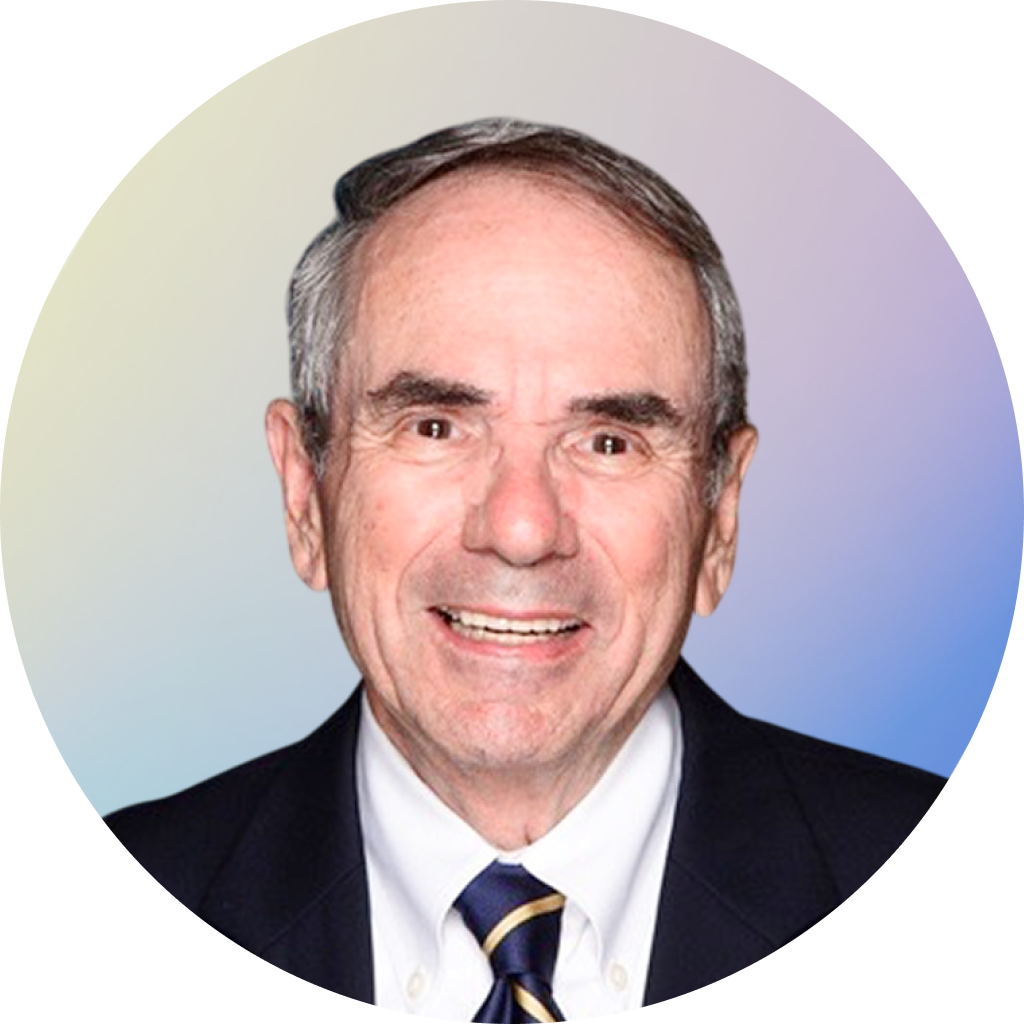
Bruce Elbert is the Founder and President of Application Technology Strategy LLC (ATS). He is a leading space technology and satellite industry expert, business innovator and successful marketer, project leader and consultant with over 50 years experience in communications and space-based systems in the public and private sectors. Areas of expertise include space segment design and operation in all orbit domains, systems architecture and engineering, ground segment systems engineering, development and operation, overall system performance improvement, and organizational development. He has been an expert witness in legal proceedings related to radio communication system performance, patents, construction contracts, service agreements, RFI identification and resolution, and taxation. Bruce was engaged in several satellite networking projects where he led and advised teams of engineers and managers to evolve LEO and GEO systems to better address rapidly changing user requirements. Prior to founding ATS, he had an extensive space industry career and directed major satellite system projects and service organizations, and led business activities in the US and overseas. Bruce Elbert currently assists a broad range of client organizations, including satellite operators and wireless service providers, equipment manufacturers, investment managers, as well as enterprises and government agencies that employ satellite and radio communications systems. He wrote several popular industry books, presented at leading industry conferences, and conducted technical and business training around the world.
Before founding ATS in 1999, Bruce Elbert spent more than 25 years with Hughes Electronics (since acquired by Boeing, AT&T, and Intelsat), where he was senior vice president, project and systems development, in the international division. In this position, he led his team to develop innovative satellite and telecommunications projects for commercial customers in the US and overseas. Among his contributions was over US$ 3 Billion in new systems sales along with development of high-performance teams. He was heavily involved in program management of several Hughes space products, including design of HS-333, HS-376, HS-601HP and HS-702 space vehicles. Bruce also managed the introduction of Hughes’ advanced broadband and mobile satellite systems in the US, Asia, Latin America and Europe. His geostationary mobile satellite architecture was adopted for the Thuraya system. During the 1980s, he directed all engineering, marketing and operations for the Hughes Galaxy System (now part of Intelsat), the most successful satellite network at that time. Under his tenure, the Galaxy system increased from three to 12 operating satellites, while system revenues grew five-fold. Throughout, Bruce managed all ground staff and resources, spectrum and orbital plans, including relationships with the FCC and ITU, and created an environment wherein RFI and all other technical issues were identified and resolved before any services were degraded.
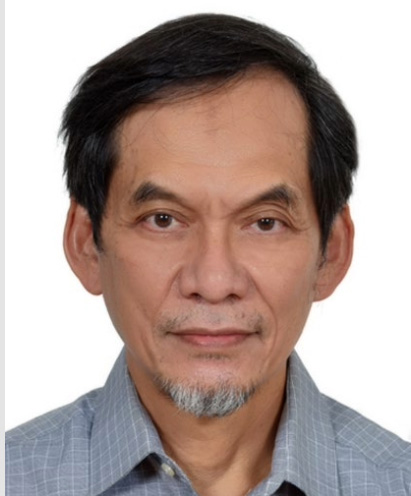
Kanaka Hidayat is a Senior Consultant in satellite technology developing various technology solutions for corporate and government clients, such as developing rural connectivity for Indonesia’s most remote areas through SATRIA satellite system and its associated infrastructure. Kanaka has also been involved in the development of next-generation PPDR (Public Protection & Disaster Recovery) System and next gen EOS (Earth Observation Satellite) constellation for Indonesia. Kanaka has more than 40 years of satellite industry experience in various functions from satellite engineering, operation, business development to marketing.
He started his career in telecommunications in 1985 in an aggressive technology company Research and Data Systems Corporation in Maryland, USA which lead him to INTELSAT, as an Engineer in Washington DC, USA, developing its Ground Network System. He has held many senior executive postions in various international satellite companies including Vice President of Satellite Operations for Satelindo. At Satelindo, he was responsible for the the operation of the Palapa-C satellite and later headed its Sales and Marketing. He then joined Speedcast as Director of Sales of Marketing. He also worked as Account Manager and subsequently Account Director for Motorola; General Manager of satellite teleport in BBSI (Broadcast & Broadband Service), a subsidiary of ABS (Asia Broadcast Satellite); Managing Director of Rumah Teknologi, a VSAT start up; Managing Director in Intelex Group, a fiber optic based ISP; General Manager of Paktel, VSAT system; Consultant for development of BRI Satellite, the first bank to have its own satellite; Consultant to Witelcom (Wireless Broadband); Consultant tor TEG (The Emergence Group) (Washington, DC). and WiMAX Forum Regional Director. Kanaka is also active in non-governmental organization such as MASTEL (Indonesian Tecommunication and Informatics Society) and ASSI (Indonesian Satellite Association).
He holds a BSc in Electronic Engineering from Capitol Institute of Technology, Maryland, USA and a MSc in Technology Management from the University of Maryland.

Learning outcomes
By the end of the webinar, participants will be able to:
02 September 2026 – Satellite Systems, Orbits & Frequency Bands
- Describe the end-to-end satellite system architecture
- Compare orbit types and justify selection
- Associate services with appropriate frequency bands
- Explain payload functionality at a basic level
03 September 2026 – Ground Segment, Link Budgets & Network Architecture
- Identify ground segment components
- Explain how a satellite link is engineered
- Interpret modem and link parameters
- Describe traffic flow in common network architectures
04 September 2026 – Spectrum Management, Filings & Interference
- Explain spectrum governance hierarchy
- Navigate allocation tables
- Describe why filings and coordination are required
- Recognize basic interference scenarios
Two organizations, One goal to support Africa
Intersputnik — International Organization of Space Communications
An intergovernmental organization established in 1971 to contribute to the strengthening and development of economic, scientific, technical, cultural and other relations by communications, radio and television broadcasting via satellites.
RASCOM — Regional African Satellite Communication Organization
An intergovernmental body of 45 African states, stablished in 1992, with primary mission to bridge the digital divide by building telecommunications infrastructure and providing reliable satellite connectivity, internet access, and broadcasting services to rural and underserved regions across Africa.
Language
Sessions run in English with parallel simultaneous French verbal interpretation. Presentations’ slides will be in English only.